
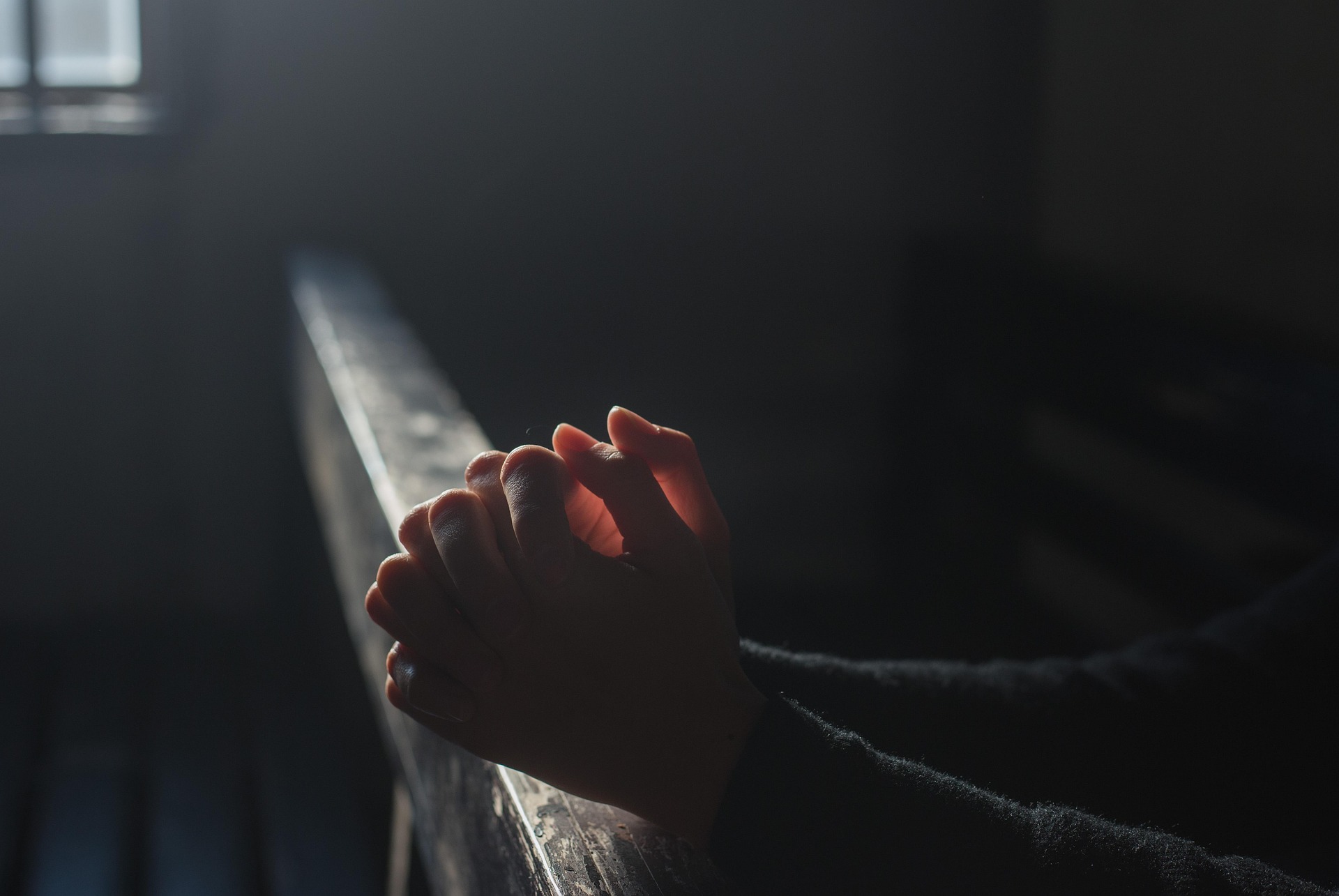
Daniel hadn’t prayed in two days.
He’d tried. But his scattered thoughts turned into jumbled words, then dissolved in his throat. Every prayer sounded hollow, echoing not in his head, but in his fractured heart.
The hospital room pulsed with two distinct rhythms: a relentless ticking measured by the seconds of the clock on the wall and the other, the vigilant beeps of a life refusing to yield. He had control of neither. A cruel reminder that his daughter was alive only because a machine told her to.
He sat hunched forward in the vinyl chair, elbows on his knees, head in his hands. He’d been awake for thirty hours straight. Probably more. The waiting became its own kind of prayer, stretched thin, its silence heavy with a God who waits and listens more than He speaks.
Daniel had prayed every way he knew how: fierce prayers, polite prayers, bargaining prayers. He’d quoted promises from Psalms and wept through the Lord’s Prayer. Yet nothing seemed to move.
Patience.
Was he waiting on God, or was God waiting on him?
“I know God can,” he thought. “But will He? For me?”
He shut his eyes, exhausted by a tiredness that ran deeper than sleep. A long breath, then the memory of a story rose in his mind. It was a Bible passage he’d read dozens of times, but one he’d never needed like this before.
A father with a suffering son had come to Jesus and His disciples. But even the disciples couldn’t help him, and by the time the father stood before Christ, his hope was all but gone; he was at the end of himself. The father pleaded:
“Have mercy on us and help us, if you can.”
The response of Jesus was not soft:
“What do you mean, ‘If I can?’ Anything is possible if a person believes.”
And the father cried out instantly, not with confidence, but with desperation:
“I do believe, but help me overcome my unbelief!”
Daniel absorbed that moment—a father completely undone, a Savior moved by love. Jesus hadn’t rebuked that father for his hesitation. He had met him there, in the if.
“Help me overcome my unbelief,” Daniel prayed in his mind. Then with a whisper. Then aloud. The words were weak, but they were all he had.
And maybe, Daniel thought, that was the point.
Faith, he realized, was not about holding everything together; it was not about having all the answers or saying the right words. It was not at all about control or action. It was surrender—complete and honest—before the God of the universe. The kind of surrender that admits powerlessness to change a situation, yet rests in the truth that God, whatever He chooses to do, remains sovereign and good.
He thought again of how Jesus responded to that father. Not with a lecture, but with compassion. The boy was healed not because his father’s belief was flawless, but because the father dared to bring what little faith he had to the right place.
Daniel leaned forward, resting his forehead against the edge of the hospital bed. The sheet smelled like antiseptic and something faintly sweet. Raising his head, he stared at the still form of his daughter. No more bargains, no more words, no more willpower. Only a thread of faith that refused to die, even when it hurt to hold it.
“I believe,” he whispered. “You can heal her. You can do anything. But even if You don’t… You’re still God.”
His voice cracked, but the words came stronger now. “You’re still good. You were good before this, and You’ll be good after this.”
The tears came again, not with bitterness, but with surrender. Not peace. Not resolution. Just surrender to the One who rules heaven and earth, and rules even the halls of hospitals.
He bowed his head beside her bed. “Help my unbelief, Lord. Help me trust You, not for the outcome, but for who You are.”
In Mark 9, the boy was healed instantly. Jesus rebuked the unclean spirit, and life returned where chaos had ruled. That miracle proved the authority of Jesus, not only over demons, but over despair.
Yet the deeper miracle wasn’t just the boy’s healing. It was that Jesus accepted a broken father’s trembling faith and called it enough.
Faith isn’t about the absence of doubt; it’s the presence of dependence. It clings to Christ when reason, emotion, and sight all fail.
Because true hope and faith aren’t found in what God does. They’re found in who He is.
Comments
No comments yet. Be the first.
Leave a comment